Wednesday, 22 August 2012

Day 4 of Peace Camp - Facing Fears and Keeping Tradition


Day 4 of Peace Camp-August 15, 2012
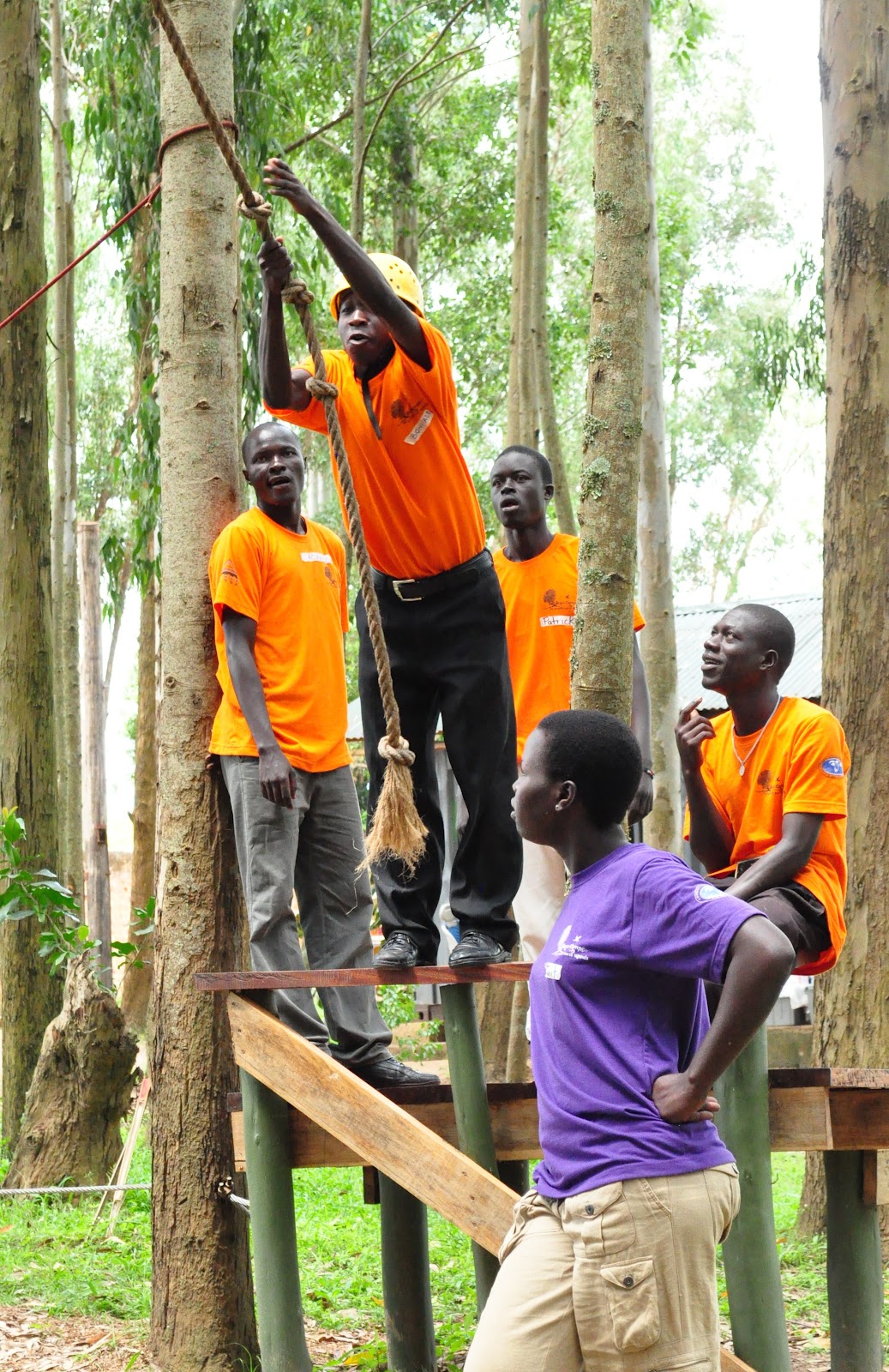
The “ropes course” was designed by two Americans under the guise of “The Recreation Project.”   The aim of the Recreation Project is to encourage war-affected youth to face their fears, and to “challenge patterns of war through active healing experiences” by engaging in fun-but intensive activities and obstacle course.  Such activities give participants the necessary tools for team building, positive communication, and critical thinking… Brilliant!

“You’ll find yourself a changed person by the end of the day,” Zach, one of the creators of the course opened the day with. “But that’s only if you push yourself to be uncomfortable…”


One of the stations at the ropes course is called the “leap of faith.”  This is when participants climb a tree (attached to a harness) and jump off, trying to catch a bar that is floating in the air.  Everyone was terrified.


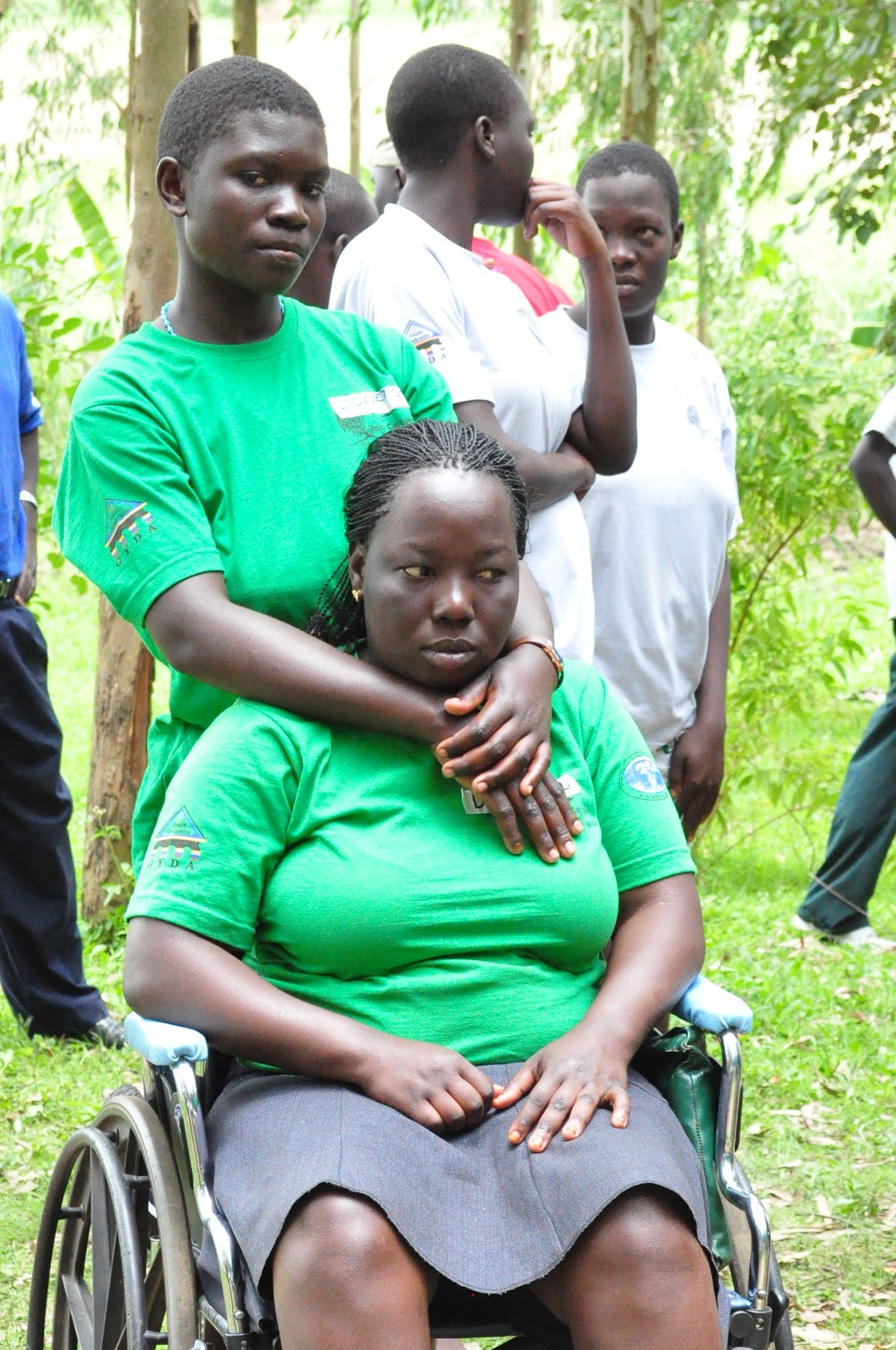
(Real time) I have to remove myself from the group because I’m too emotional after what I just saw.  We have a differently-abled camper who is in a wheelchair as a result of Polio, and has very little use of his legs. Nonetheless, he has been very active.  He even joined us in yoga yesterday, and today, decided also to take the “leap of faith.”  With dozens of other campers watching and cheering, Opiyo Dennish did just that.  Though it was challenging for him, he climbed the tree, and he jumped.  I was so inspired by his determination and courage.  What moved me the most, however, was the roaring support of his peers.  In a culture where differently-abled people are referred to as “parasites,” Opiyo Dennish defied all boundaries, and took one giant leap of faith for all differently-abled people, everywhere.


Olympia Joyce was nowhere to be seen during the “leap of faith.”  Though she is one of “my girls,” she is not in my camper group.  I did that intentionally, as she is a shy person by nature, and I wanted to challenge her a bit.  When her camp counselor (Aubrey) and I finally did find her (it seemed as though she had been hiding), we pleaded with her that she at least try the “leap of faith.” With tears forming in her eyes, she outright refused.  After a lot of counseling and encouragement though, she finally did decide to try.  Though I could see the terror in her face as she hesitated at the top of the tree, she eventually conquered her fear… and jumped.  And when it was all over, she was glowing with pride.  And so was I.
The Recreation Project facilitator closed the “leap of faith” activity by saying: “Today, you have faced your fears and have taken a leap of faith… By the end of this year, what other leaps of faith will you challenge yourself to take?
...
Because the war lasted for over 20 years, many of these young people missed out on a lot of their lives.  The war halted their education, and amongst other things, deprived them of their cultural and tribal traditions.  For tonight’s bonfire, we invited tribal elders to talk to the youth about each of their cultural traditions, and sat around the fire, as they do, while we listened to their stories.  Then, as a gift to each elder, each of the four tribes performed their tribal dances. 


The evening felt authentic and organic, and was the perfect closing to an incredible day.

Tuesday, 21 August 2012

Day 3 of Peace Camp - Sex, Yoga, and Taekwondo

Day 3 of Peace Camp-August 14, 2012
The day started out as it does each day, with the raising of the Ugandan flag, the singing of the National anthem, and introductions and cheers from each group. 


The “kids” were surprisingly energized as we finished our morning porridge and tea, and headed off to our first session:  Nonviolent Communication, which was immediately followed by a session focusing on Income Generating Activities (IGAs):  How to create and implement a concept that will generate individual income, and thus empower the youth (particularly the women) to become independent.

For our reproductive health session, we split up the boys and girls, and created a safe space to talk something very taboo: sex. Of course the girls were very shy at first, but my fellow PCV, Rebecca, did an amazing job facilitating in a very non threatening way:
“Today we are going to talk about VAGINAS…  What are we going to talk about?”
“Vaginas,” the girls whispered.
“Today we are going to talk about PENISES… What are we going to talk about?”
 “…But first we are going to talk about our bodies,” she said, and pulled out a detailed diagram of the female reproductive system.”  The girls seemed genuinely curious, as I am quite sure they had never before seen such a thing.

Slowly, they began to open up and ask questions.  I think they started to feel comfortable because the PCVs who were in the session, talked freely and openly about sex.  We talked about puberty, erections, wet dreams, the menstrual cycle, and sexual urges.  This made it easy to transition to the topic of sex.

Using wooden penises, we practiced putting on condoms, and began to denounce some common cultural myths…
You can’t get pregnant the first time you have sex.
If you jump up and down after sex, the semen will fall out.
You have the same chance of contracting HIV if you wear a condom or not.
Condoms can be reused.
…And so on, and so on.
Though I wish we delved into the aspect of boundary setting, and saying “no” when we don’t want to “play sex,” we at least provided the girls with some informational tools, that will undoubtedly empower them… Because when we are in charge of our own bodies, then we are in control of our lives.
…
During our yoga class, I was immediately taken back to my dancing days. Oh how I achingly miss dancing. I swear if I had had the “right body,” I would have pursued dancing as a career… But I do know that I am doing the work I am meant to do.  Still, as we went through poses and stretches, I couldn’t help but think I’ve still got it!


I think the campers really liked it as well… though I’m pretty sure they think a lot of the things we mzungus do are quite strange.  From one extreme to the other, we then went to a Tae Kwon Do class, which most of (the boys) liked more, though I did not share their same sentiment.


Even though everyone was exhausted, we had to practice the drama we are to perform as small groups on Friday.  I don’t know if I have mentioned this yet, but I have two non-hearing campers, Aron and Dominic, who were both the most incredible actors.


My Ugandan co counselor however, is something else.  I think he thinks he is a camper.  I often have to remind him to translate for Aron and Dominic (which is his primary role), and that we as counselors are not supposed to answer questions during the sessions.  Ha!  Sometimes it irritates me, but mostly it just amuses me… especially when he decided to direct and star in a group’s drama.
Unfortunately, since we were late to most of our sessions all day (ahem-“African time”), we weren’t able to have our group reflections like we are supposed to do each day.  But after supper, we split up into two large groups, and one went to learn about HIV, while the other went to an art session.  During our art session, we played music as the campers decorated empty water bottles with fabric and ribbon, so that they could fill them up with sand, and use them as candle holders for our nightly vigil.
I know the campers had so much fun today. I just hope that we can get to all the nitty gritty stuff in the days that will follow.

Day 2 of Peace Camp - Theatre, Dance, and Activism

Day 2 of Peace Camp-August 13, 2012
(I guess it's important to note that these are personal reflections based in my own perception, are not meant to be offensive, and do not necessarily reflect the beliefs of all attendees.)
During a play put on by the “Rafiki” theatre, it really concerned me-the moments when the “kids” would laugh. The play was about domestic violence and women’s rights. Examples acted out included a woman wanting to go back to school, and another saying “no” to sex.  When the male actor would act out beating the woman, or even throwing her down on the ground to rape her, the audience would laugh… why did they laugh? 
And when an actor said that women are to be submissive because the Bible says she comes from the rib of the man, everyone cheered.  In the play, the woman told her husband that she wanted to go back to school. As a result, she was beaten.  In a discussion afterwards, some campers suggested that her approach be different.  The facilitator asked someone in the audience to demonstrate what that would look like, and when a female volunteer walked to the front of the room, the young men in the group started objecting, saying that another volunteer should be chose because the young woman who was picked was wearing pants-not a skirt, and that showed “no respect.”  She didn’t seem affected by these comments, and continued to demonstrate an alternative approach to requesting permission to go to school, that would be a little but more culturally appropriate. So what did she do?  She knelt down on her knees and softly pleaded to her husband grant her permission…
It seems as though “respect” to one’s husband in this culture is equivalent to being submissive and obedient.  When we approached the subject in smaller groups, there was a consensus amongst the young men that culturally, the woman is not to be superior.  If a woman completes a higher level of education, or earns more money than the man that she married, he will be left feeling insecure. 
“The more that she studies, the more men she gets... Then she will leave us.”
“The higher they go, the more undisciplined they become.” 
These examples of insecurity are often the root cause of domestic violence.


"Rafiki" theatre actors: (The women in front is an incredible activist, and facilitator, and has become my new favorite person).


To facilitate our self-esteem talk, I had invited my friend, and 2011 CNN hero of the year award winner, Sister Rosemary. Unfortunately, but not all that unusual, she had to back out at the last minute. So, upon recommendation, I invited another strong and successful woman to step in, who, to my surprise, decided to change the discussion topic and give a health class rather than a self-esteem talk. During our reflection session later in the day, my campers singled this session out as the worst of the day. Fail.
Thankfully, the day was rectified by our tribal dance rehearsal.  All it took for me to say was “you have one hour to plan and practice for a 15 minute tribal dance performance” -and they were off.  I don’t know if they were born dancing, but immediately they were in sync-in formation and in moves. Everyone knew exactly where to be and what to do, and I didn’t have to do anything.  I loved stepping back and watching them work together with such organization and enthusiasm… But I couldn’t stand still for long, and just had to join in. After all, it is the African rhythm that moves my soul.


Prior to Peace Camp, one of the eight professional psychologists I invited asked me if they were going to get paid.  Since we had lost our grant money, I wrote an email to all eight of them explaining our situation, and asked them if they would, in good faith, offer their services in exchange for transport costs, meals, and a camp shirt.  I then called them each individually to make sure they had received my email, and to ask them if they were still on board.  They all obliged.  So you can imagine my confusion (and fury) when they demanded compensation.  When I reiterated what we had repeatedly talked about before, they also reacted in fury, claiming to have received no such information… are you kidding me?!  At the end of such a long day, this made me feel crazy. Additionally, it was brought to our attention that one of the psychologists actually told one of the campers that women “incite rape” by the way we dress.  Sigh… maybe this whole “psychologist” thing wasn’t such a good idea after all. 
...
I missed the first half of the next “Rafiki” theatre’s play because I wanted to “bathe” and wash some clothes.  When I did arrive, I was immediately moved by, and immersed in their discussion about tribalism.  Since the LRA rebels abducted children and forced them to abduct and kill others (often from other tribes), many tribes have yet to reconcile. This has created a large divide amongst tribes in the North. Northerners in general are fiercely discriminated against as a whole people by the rest of the country.  They are commonly called “Kony” (in reference to the LRA leader, Joseph Kony), and taunted in school, labeled as killers.  Even when I found out I would be serving in the North, I can’t tell you how many non-Northerner Ugandans warned me about how “bad those people are,” and how they “kill each other.”  …I’ve actually never met kinder people who have been victimized more.  One of the goals of Peace Camp is to build unity amongst tribes, who have been divided by this war.  I think this play and the discussion that followed planted that seed.


And the day ended with a moving candlelight vigil.

Monday, 20 August 2012

Day 1 of Peace Camp - And so it begins

Day 1 of Peace Camp-August 12, 2012
Well, it’s technically day 3 because we’ve been training for the past few days… But today was the day that the campers arrived.
The first half of my day was crazy. While my Acholi campers were slowly arriving at their consolidation point, I was running around town like a headless chicken, trying to tie up loose ends, and buy last minute supplies… I think I must have lost 5 pounds.
Even though I told the campers to wait until I had returned, and until all other campers had arrived before they left, they of course, did not listen (or did not hear?) and started traveling to the camp venue on their own in small groups. It wasn’t long until I had lost track of everyone.
For Peace Camp, we invited four different tribes: the Acholi, Alur, Lango and Teso (all of whom has been affected by the Northern war).  As a regional coordinator, I was only in charge of organizing the Acholis (thank God). 
Here are some of the Acholi boys:

...But, since one of our counselors didn’t show up, I was quickly assigned her role as well. 
This is my camper group: The "Crested Cranes"

Hours later, when we finally did arrive at the venue, waiting for us was a handful of Acholis who had not been accepted to Peace Camp, but who had showed up anyway… Lucky for them, many campers from other tribes did not show up, and they were allowed to stay.
Finally, I could breathe.
The opening ceremony was very… interesting. We had invited the local police (yay!) to raise the Ugandan flag, and together we sang both the National, and each tribe’s anthem. This was before one of our invited guests grabbed the mic (I think hoping to incite a riot) and scolded the campers for singing their anthems with empty words, and not caring, while the rest of the country is suffers…
Welcome to Peace Camp! ;)

Later, we watched a break dancing group perform, watched the film “Invictus,” took our bucket baths, and went to sleep.


And as weird as the day was, I remember thinking “there’s actually nowhere else in the world I’d rather be than here.”

Peace Corps Volunteer sisters and fellow camp counselors: Aubrey Woodson, Griffin Smith, Erin Morrison, Susy Valle, and Me. :)

Monday, 6 August 2012

Peace Camp is a pain in my ass

 
Yup, I said it.
Peace Camp was created by a Peace Corps volunteer, and is designed to focus on the war-affected youth of Northern Uganda. Most participants were abducted as child soldiers. There will be eighty participants representing 4 different tribes. For one week, we will focus on reconciliation, forgiveness, peace-building tools, trauma healing and restorative justice. This will be done through workshops, guest speakers, games, movies and so on and so on.
Amazing, right? I’m stoked about it... but being a part of organizing it has been, like I've said, a pain in the ass.
First of all, I was supposed to pick 20 participants from the Acholi tribe. I received about 100 applications and spent days, hours, and WEEKS reading them over and over, trying to figure out how I could possibly rank people’s painful experiences... But I did it. (I will share some of these stories in another, more serious post).
Now that the camp is a week away, I am trying to organize all participants to show up to the same place, at the same time, on the same day. Now this might seem simple to you… and if you have the privilege of living in a Western world, then it IS simple. Here, it is nearly impossible. Since there hasn’t been any power, most people’s phones are not charged… that is, if they have a phone. I usually have to call someone’s aunt’s "brother cousin’s" daughter to find them. If I DO reach them, then I face the inevitable communication challenge that I have become so used to. I immediately turn on my “Uganglish” (I speak English with an entertaining accent, using weird terms like "you first come" so that I am understood… That is, of course, after my Acholi language skills have failed me). I usually hang up the phone disoriented, wondering what it is that I just said... Such challenges arise daily, but with the responsibility of being a regional coordinator for Peace Camp, there is a lot more pressure. After all, everything here takes fifty times more effort, and is overall… just. more. complicated.

I also have rent a bus, find an elder to speak about cultural traditions, find a prominent Acholi woman to speak about self esteem, and magically stir up 8 certified psychologists.
No problem. Ayella Pe. Hakuna Matata…
Speaking of more complicated… “water is again finished” at my house, so I am back to the good old days of standing in a bucket and “showering” with a cup.

I love my life. :)


xoxo
Jenna

Wednesday, 30 May 2012

An Update on the Girls

Since the girls have just completed their first term in Secondary school, I think it's only appropriate that I give you an update!


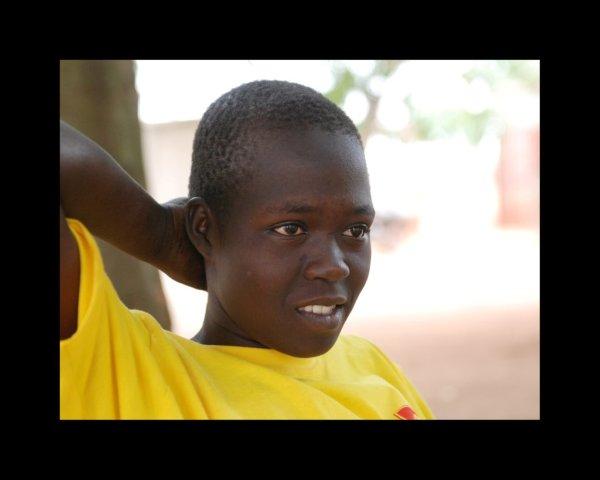
...Here they are! (Oh, and of course they have given me permission for this disclosure).


Limpe Grace’s name means “without money.” But as naming goes in this culture, there are many worse things she could be called. Before the first term ended, Grace approached me with a letter she had written, describing the struggles in her life. I guess it’s important to note that my only knowledge of theses girls’ pasts comes from the case studies I had received before I met them. I didn’t want to ask them questions about the war, because I wanted the girls to tell me about their lives when they were good and ready. Some have not reached that point, but Grace has. In her letter, Grace told me how she was born in the bush, along with three of her other siblings, after her mother who had been kidnapped years before had met her father who had been kidnapped too. In 2000, her father was killed, and a year later, her mother escaped, leaving Grace and her brother with their step mother. After her mother left, Grace stayed in the bush for another two years before escaping with her step mother, and reuniting with her biological one. “In that year, as a result of killing, looting, and doing other bad things, her mind got confused and she became a mad person. She doesn’t want to see her children around her, and keeps saying that she is going to kill us.” So Grace, and her sister left to go stay with their aunt. “And in December of 2005, the sister of my mother took us back to our mother because she heard that her mind was okay, and she wanted to see us. Then we went to stay with her together without any problems because her mind was now okay.” It was then that the Belgium government came, and Grace and her brother qualified to go-free of charge to a school designed for war-affected children. “In 2007, my mother looked for another man to keep as her husband, and that man married her and immediately produced two girl children. The man began saying that he doesn’t want a woman who produces only girls, because girls waste a lot of money for nothing, and that girls don’t keep or defend the home-they just go away… In 2009, he actually chased my mother away from his home, and began to abuse my mother, saying that my mom is a person who came from the bush, and he doesn’t want a person who came from the bush to disturb him for nothing. He also said that I am big enough, and should look for someone who can keep me for the rest of my life a part from him.” A year later, Grace’s mother went back to this man, but was again chased away when Grace returned from Primary school. It seems then, that Grace and I found each other at the exact time we needed to. She gave me this letter, because she did not want to spend her one month holiday from school with her mother. Instead, we found her a hut to stay in together with Joyce, and another girl whom which the organization I am working with is sponsoring. During the school holiday, I went with Grace to her village home to meet her mother. She was a sad woman with too many children, and absolutely no money. In their hut, there was only a stove, and a straw mat that the whole family sleeps on. When the mother inevitably started asking me for help paying the other children’s school fees, I asked her what kind of business she would like to start, and she said she wanted to sell fish. So, the following day, we went on a big outing to town, where I paid for her first round of fish. We talked about how she needed to and split her earnings into three parts: one part would go towards buying food, and other basic living necessities, the second part would go towards buying more fish, and the third was to be saved for school fees. From what I last heard, Grace’s mother is very happy, and is doing well. I can’t wait to see if this project turns into something that will empower her as well.

Grace is a very sharp girl. I don’t know how she has her head on so straight, but she does. She is 16 years old, is strong and confident, and did very well on her first term exams. Out of 120 students, she was placed in the position of 17, meaning that only 16 other girls scored higher results than her.
"Auntie, my life was very hard. When I sat for primary exams in 2012, I thought that nobody would help me. Even at our home there. Nobody is possible to help me. They just see me, ‘ah ahh let that girl just waste her time.’ Then I sit down and I think, how am I going to study? How am I going to stay in this world? Who is going to help me? Even I lose the hope. Maybe I am going to be poor until I die. So, my best thing is just to thank you.” 


Joyce has a heart of gold. She is perhaps the sweetest, most loving and kind person I have ever met. When planning to send girls to school, thinking I would only have enough money for one, it was Joyce’s story that stood out to both my mom and me, as much of her life seems unfathomable. Whereas the other girls seem to have at least one distant relative, Joyce has no one. Both her parents were killed during the war when she was very young, and her sole family was that of her brother whom she loved and adored so much. She stayed with her brother, his wife, and their child until late 2011 when he unexpectedly died. Joyce is still in a deep state of trauma, and dreams about him every night. The wife to her brother immediately disowned her, and remarried. It seems as though Joyce and I found each other at the perfect time too. Her full name is Alimo Olympia Joyce, and I think she likes the name Olympia the best, so I will call her that from now on. Before the first term ended, Olympia also approached me wanting to talk. She is a very shy person, and I was surprised that Grace who is very confident wrote me a letter, whereas Olympia decided to talk to me face to face. She couldn’t hold back tears as she talked to me about her brother, and about the child whom he had left behind. With all that she has lost in her life, it seems as though Olympia is not as much concerned with herself as she is concerned with the well-being of her niece. She told me that she had nowhere to go during her school holiday, and thus, stayed with Grace and another girl in the hut I mentioned above. She is a very responsible 17 year old, wise beyond her years, and I know that she will make a great mother some day. Olympia has been struggling in school, which is a surprise to her peers since they all seem to comment on her cleverness. Obviously this has to do with the emotional trauma she is experiencing. Still, she loves History and Geography and scored extremely high results in these areas on her first term exams. The subject she despises, however, is math. Since she has been in school, I have seen her self confidence grow, and I look forward to witness where the future will take her.


"I want to give thanks (to those who donated) for what you have done for us. When I sat for my Primary Leaving Exam 2010, I don't know whether I am going to stay hungry or nor. But I know God is Great. And I want to give thanks because you have brought us here, to a good secondary school in Uganda, and I thank God for that."
Melissa is the actress of the bunch. When I take photos, she is not shy, and she is quite the social butterfly. She is the one girl who is going to a different school, and is two grades above the rest. She is now 17 years old, and has dreams of becoming both a nurse and a singer. She so badly wants to go to America and even asked me if we can go during the next school holiday. I couldn’t help but laugh and tell her that I can’t even afford to go to America myself. Melissa doesn’t seem to understand the value of money, and it has become a personal project of mine to guide her, so that she is able to make smart choices in life. Melissa is a very determined girl, and when given the choice to repeat Senior 2 because she had been out of school for so long, declined, and decided to push herself in Senior 3. I have not received her results yet, but I am not worried. She is clever, confident, and a big dreamer. I think she knows she has to do well in order to get to where she wants to go. She tells me that going to school is “so important for my great future.” Being educated, she continues, will allow her to make her own money, which will help her to become independent, and give her the means to help people. She loves Biology, Geography and English, and hates Math, Physics, and Chemistry. She thanks God for those who have made it possible for her to go to school, adding “may God bless them.”


(Melissa's photo coming soon)


Brenda is a natural leader. Whenever I get a phone call on behalf of the girls, it comes from Brenda. She is not afraid, and she is not shy, even though she carries herself with a strong quietness. She is a little bit of a “tom boy,” buying unusual shoes for her school uniform, and loving any and all sports. She is also a fantastic singer, and like Melissa, has dreams of aspiring to be one, though I see her as more of a business woman or politician. After finishing school, she would like to "go outside Africa" -possibly to America to study art. Even though her results weren't that bad, when I told her what she scored in her exams, she was so so disappointed in herself. When I said that she should be proud of herself since she hasn’t been in school for some time, and that Senior 1 is designed to be extremely difficult, she refused to accept that, and promised both me and herself that she would work harder to achieve better result next term. I believe her.


“My life was hard. But now, I am looking forward to have a great future.”

Scovia is the most outgoing of them all. Whereas Brenda naturally falls into leadership roles, Scovia likes to be there. When I give them money for shopping for school requirements, or something of the sort, it is always Scovia who volunteers to manage the money. Her favorite subject is Chemistry (which the others despise) and she has hopes of becoming a nurse because she wants to "heal people." She is friendly and talkative, and has thrived being in this new environment.


"I want to give thanks to you (donors). For me, when I sat for my primary leaving examination, I even lost hope that I’m not going to continue with my studies because nobody is there to help me. Then I want to give you a very great thanks. May God bless you."

I wish to get closer to Sarah. She is timid, but there is a light inside of her that is just waiting to explode. Sarah has struggled with school in the past, so much so that it was difficult to get her accepted into this school. However, her confidence has grown, and though her results weren’t high overall, she has exceeded in a few areas, and could not WAIT to tell me that she got 86% on her history exam! In a previous post I spoke about how Sarah’s neighbor tried to poison her, because she was jealous that she was getting sponsored for school. But she has not been wavered by the experience. Sarah is a brave and determined young woman, and I can’t wait to see the ways in which she will grow.


“Auntie, when I sat my exams in 2010, I think that no one even can help me to go to school, because in our family, we are seven. When I was in our former school, I think that no one can help me like you. I thank God so that he give you more and more life in this world.”
These girls keep me going an inspired every day. I joke that I have adopted six teenagers, but in reality, they feel like my sisters. I can’t tell you how much being in school is impacting their lives, their self-confidence, and their futures. To all of you who made this possible, I, and all the girls thank you deeply.

If you would like to be a part of this journey, and are willing and able to donate, please send what you can via PayPal to Dishywes@hotmail.com
Love and Light,
Jenna

Friday, 25 May 2012

New Water Project

"Investing in improved sanitation and drinking water could save 2.2 million children per year." (unwater.org)
When Naimat came to visit me in January, he was shocked by the lack of access to clean water, and specifically, by the high cost of drilling a borehole (a water well). In Pakistan, where he is originally from, every household in the villages has a water borehole of their own, whereas here in Uganda, women and children often have to walk miles to what is often a very dirty and unsafe water source. Furthermore, he was appalled that it costs roughly $10,000 to drill a new borehole in Uganda, because in Pakistan, it only costs $500.

In a country with so little, clean water is the most basic of human rights.
So, after returning to America, his mind was still in Uganda, and it didn’t take long for him to return. This time however, we invited his childhood friend and technician from Pakistan to come as well, bringing along with him enough materials to build two demonstration boreholes; our hope being that some NGOs or private investors will see the benefits of this technology and help us implement them on a large scale.

In addition to being more affordable, this new borehole technology is easier to maintain and produces cleaner water than the existing boreholes. The existing boreholes use metal piping which rusts and needs to be repaired once every six months. Metal piping is very expensive, and with so many boreholes needing to be repaired, communities often go months without access to water. With this new technology, we use PVC piping instead of metal piping, which obviously does not rust, and will last for 100 years. Additionally, we put a filter at the bottom of the piping, making the water more clean and safe. To repair these new boreholes, you only need to replace a small, circular device in the pump that costs about 25 cents, and is easy enough for a child to do.
Needless to say, this new technology is beneficial on many levels, and will provide more clean water to more people.

Waterborne diseases are one of the top killers in rural Africa, especially amongst children. Can you imagine that people in this world die because they don’t have clean water? Like I said, it’s the most basic of human rights, and something needs to be done... And we’re trying.
We have completed one borehole that will now provide clean water to 800 people in the village of Loyoboo. We are in the process of completing our second one.  And we hope to the Universe that there will be many many more...

This is what many of the water sources look like here in Uganda. Can you imagine? Hundreds of people get their water for drinking, cooking, bathing and washing from this very source:


Drilling is manual labor and hard work! We definitely take machines for granted in the Western world. It took us two and a half days to drill 36 feet:


It was a dirty job:


But we did it:


Being in the psychosocial field, it is rare that I see a project completed. When clean water came from that tap, it set my soul on fire. And the people were so happy, they could hardly contain their liberation...


WATER IS LIFE.
For more photos, check out the album "Water Project Photos" on my facebook page.

xoxo
Jenna